Land Title Verification: Why It Matters and How Experts Ensure a Clear Title
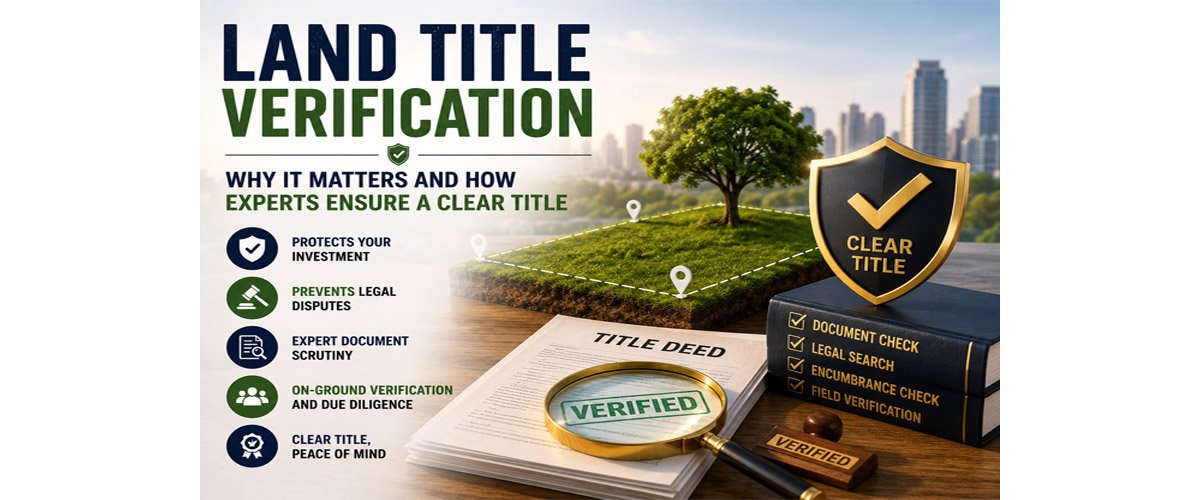
Purchasing land can be one of the most rewarding real estate investments, offering significant long-term appreciation and development opportunities. However, land transactions also carry legal risks that can lead to ownership disputes, financial losses, and lengthy court proceedings if proper due diligence is not conducted.
One of the most important steps before buying land is verifying the property's title. A clear and marketable title ensures that the seller has legal ownership and the right to transfer the property without complications.
In this guide, we'll explain why land title verification is essential and how real estate experts help investors secure properties with legally clear ownership.
What Is Land Title Verification?
Land title verification is the process of confirming the legal ownership and status of a property before purchase.
The objective is to determine:
- Who legally owns the land
- Whether ownership can be transferred
- Whether disputes exist
- Whether legal restrictions apply
- Whether the property is free from encumbrances
Proper verification helps buyers avoid future legal and financial complications.
Why Land Title Verification Is Important
Prevents Ownership Disputes
One of the most common causes of property litigation is unclear ownership.
Verification helps confirm that the seller has the legal right to sell the property.
Protects Your Investment
Buying land without proper verification can result in significant financial losses if ownership issues emerge later.
Ensures Legal Compliance
Title verification helps confirm that the property complies with local regulations and land-use requirements.
Simplifies Future Resale
Properties with clear titles are generally easier to sell, finance, and transfer.
What Is a Clear Title?
A clear title means:
- The seller has legal ownership.
- No ownership disputes exist.
- The property is free from legal claims.
- There are no unresolved encumbrances.
- Ownership transfer is legally permissible.
Properties with clear titles provide greater security for buyers and lenders.
Documents Reviewed During Title Verification
Title Deed
The title deed establishes ownership rights and forms the foundation of the verification process.
Sale Deeds
Previous sale deeds help establish the chain of ownership.
Encumbrance Certificate
This document indicates whether the property has any outstanding legal or financial liabilities.
Property Tax Records
Tax payment records help confirm ownership and compliance.
Mutation Records
Mutation documents show updates in government records following ownership transfers.
Land Revenue Records
These records provide important information regarding property classification and ownership history.
How Experts Conduct Land Title Verification
Step 1: Ownership Verification
Experts confirm the seller's legal ownership and authority to transfer the property.
Step 2: Chain of Title Examination
The ownership history is reviewed to identify gaps, inconsistencies, or disputed transfers.
Step 3: Encumbrance Review
Professionals verify whether loans, mortgages, liens, or legal claims exist against the property.
Step 4: Legal Compliance Assessment
Experts ensure compliance with local land-use regulations and zoning requirements.
Step 5: Litigation Search
Property records and court databases may be reviewed to identify ongoing disputes.
Step 6: Government Record Verification
Land records are cross-checked with relevant government authorities.
Common Title Issues Buyers Should Watch For
Disputed Ownership
Multiple individuals claiming ownership rights.
Missing Documentation
Incomplete ownership records can complicate future transactions.
Outstanding Loans
Mortgaged properties may carry financial obligations.
Inheritance Disputes
Properties acquired through inheritance sometimes involve unresolved legal claims.
Unauthorized Transfers
Improper transfers can affect ownership validity.
Benefits of Working With Real Estate Experts
Professional Due Diligence
Experts understand the legal and technical aspects of title verification.
Risk Identification
Potential problems are identified before the transaction is completed.
Faster Verification Process
Experienced professionals can efficiently review records and documentation.
Greater Peace of Mind
Buyers gain confidence knowing the investment has undergone thorough legal scrutiny.
Best Practices Before Purchasing Land
Never Skip Legal Verification
Even seemingly straightforward transactions require proper due diligence.
Obtain Original Documents
Review original ownership records whenever possible.
Verify Government Records
Cross-check information with official authorities.
Seek Professional Guidance
Legal and real estate experts can help identify risks that buyers may overlook.
Conclusion
Land title verification is one of the most important steps in any property transaction. A clear title protects buyers from ownership disputes, financial liabilities, and legal complications.
Whether you're purchasing land for investment, development, or personal use, conducting thorough title verification can safeguard your investment and provide long-term peace of mind.
Partnering with experienced real estate consultants and legal professionals ensures that every aspect of ownership is carefully examined before purchase.
Frequently Asked Questions
What is a clear title in real estate?
A clear title indicates that the property has legally valid ownership and is free from disputes or claims.
Why is title verification important?
It helps confirm ownership, identify encumbrances, and reduce legal risks before purchase.
What documents are required for title verification?
Common documents include title deeds, sale deeds, encumbrance certificates, tax records, and land revenue records.
Can a property be sold without a clear title?
While transactions may occur, purchasing property without a clear title can expose buyers to significant legal and financial risks.